The Digital 'Eierhaus' Uprising: How Political Offices Were Renamed on Google Maps
In a digital twist that blended satire with serious political undertones, multiple CDU and CSU offices across Germany found their official designations on Google Maps unexpectedly altered. From the bustling streets of Munich to the quiet towns of Saxony, these political geschäftsstellen umbenannt eierhaus – or "business offices renamed 'Egg House'" – became a viral sensation, sparking debate about online vigilantism, platform vulnerabilities, and the evolving nature of protest in the digital age.
What began as a seemingly localized prank quickly revealed itself to be a widespread, coordinated effort, transforming the digital identities of numerous party strongholds into whimsical, often pointed, new names. This article delves into the specifics of this intriguing incident, explores the mechanisms that allowed it to happen, and offers insights into how organizations can protect their digital presence from similar manipulations.
The "Eierhaus" Phenomenon Unpacked: A Nationwide Digital Satire
The renaming spree didn't discriminate, affecting a wide array of CDU and CSU locations. From regional party offices to state parliament fractions, the digital vandalisation was extensive. In Saxony, Thuringia, and Saxony-Anhalt, locations in Eisleben, Delitzsch, and even the state parliament in Dresden were among the first to see their names changed to "Eierhaus" or "Eierladen" (Egg Shop). Variations abounded, showcasing a creative, albeit mischievous, approach: one Nordsachsen district office briefly appeared as "rehbraunes Eierhaus" (brownish-red Egg House), while an Erfurt office was dubbed "Eierladen."
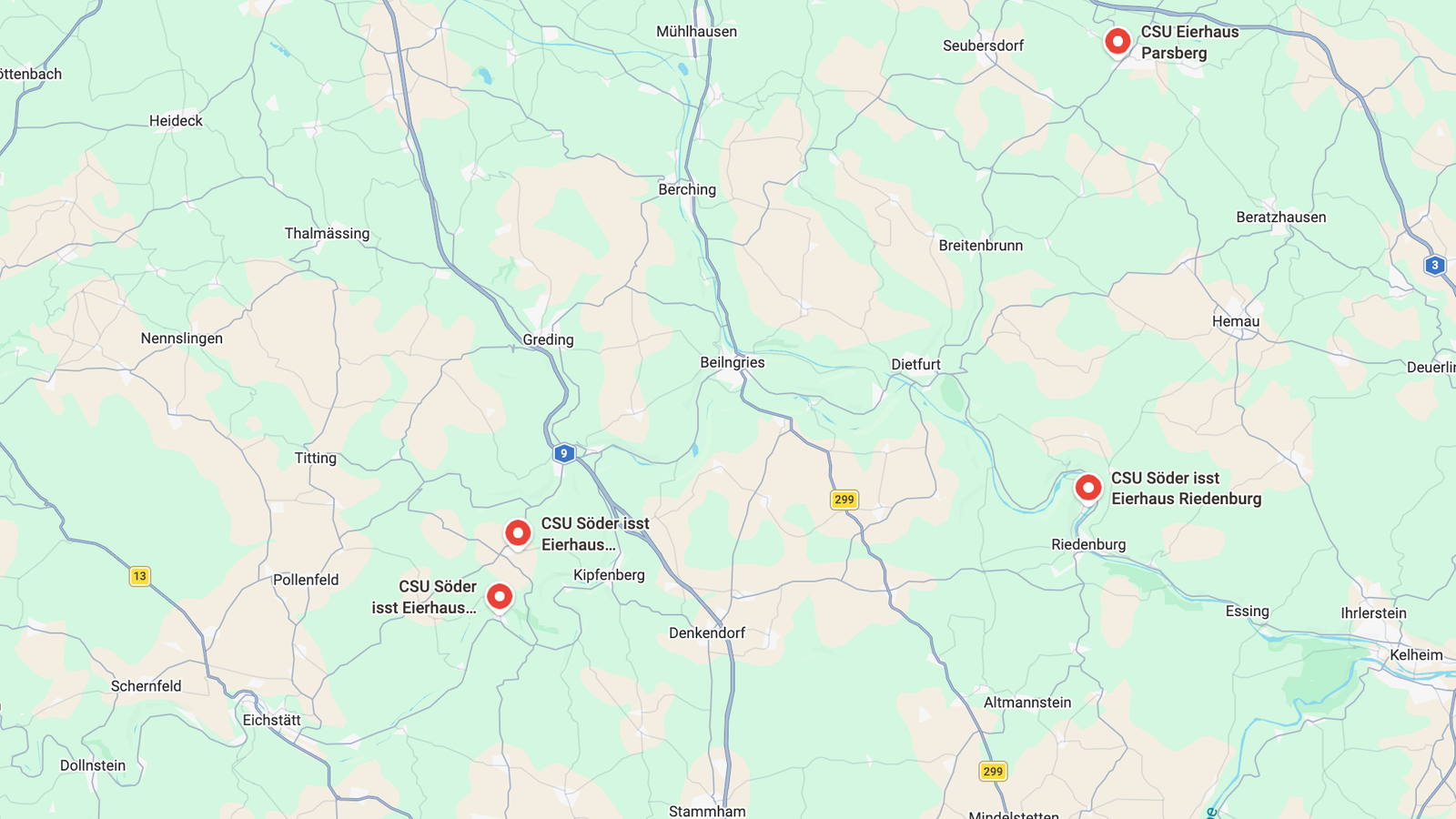
The Bavarian CSU offices, however, witnessed an even more personalized touch. Many entries, such as those in Munich-Bogenhausen, Neuried, and Parsberg, adopted the moniker "CSU Eierhaus." More notably, some were changed to "CSU Söder isst Eierhaus," a direct jab at Bavarian Minister-President Markus Söder, integrating his popular social media hashtag #söderisst (Söder eats) into the protest. The manipulation went further, with the canteen at the CSU state headquarters in Munich appearing as "Löwe + Raute (CSU bunte Eierhaus Kantine)" (Lion + Rhombus (CSU colorful Egg House Canteen)), and some entries even being categorized as "public toilet." This demonstrates a sophisticated understanding of Google Maps' editing features and a clear intent to both satirize and insult.
Beyond the initial hotspots, reports confirmed that CDU offices across Germany, including those in major cities like Düsseldorf, Hamburg, Berlin, Hannover, Mannheim, and Karlsruhe, were also affected. The sheer scale of the operation underscored its premeditated nature and the reach of the individuals behind it.
Behind the Digital Curtain: Google Maps' Vulnerabilities and the Protest's Roots
How did such widespread manipulation of official political locations become possible on a platform as prominent as Google Maps? The answer lies in the very architecture of the service. Google Maps thrives on user-generated content, allowing individuals to contribute by adding missing places, reviewing locations, and crucially, suggesting edits to existing entries. While this crowdsourced model vastly enriches the map data – Google reportedly receives around 20 million contributions daily – it also presents a significant vulnerability.
Due to the sheer volume of daily edits, not every suggested change can be immediately verified by human moderators. Many edits are initially accepted and only later undergo scrutiny. This delay provides a window of opportunity for malicious or prankster-driven alterations to go live, even if temporarily. Google itself acknowledges this challenge, stating that in 2024 alone, it blocked or removed over 240 million policy-violating reviews and more than 70 million problematic place edits. Yet, some still slip through.
The motivations behind the "Eierhaus" rebranding appear to stem from a specific political incident. A Threads account named "saftsackbeats" claimed responsibility, framing the action as a "demonstration" against CDU leader Friedrich Merz. The background cited was a controversial incident in March 2026, where an 18-year-old at a student protest against new military service regulations held a placard with the slogan "Merz leck Eier." Police subsequently confiscated the sign and initiated investigations for defamation. The renaming on Google Maps, particularly the "Eierhaus" designation, is widely understood as a direct, albeit veiled, reference to this event and the sentiment it represents. This incident highlights a growing trend of digital protest leveraging location-based services for political expression and satire.
The Echoes of Digital Dissent: Reactions and Implications
The "Eierhaus" saga elicited a spectrum of reactions, from outright condemnation by some political figures who viewed it as digital vandalism and defamation, to more amused or even sympathetic responses from others who saw it as a creative, albeit unconventional, form of protest. The official silence from some affected parties, like the CDU faction of the Dresden State Parliament, suggested a reluctance to amplify the prank further, hoping it would fade away.
This incident is not isolated. Digital rebranding as a form of protest seems to be gaining traction. A similar event unfolded on Apple Maps, where the famous Playa de Palma in Mallorca was briefly displayed with the German word "Betrunke" (a colloquial term for drunken people), reflecting a local protest against excessive tourism and rowdiness. Such actions underscore the evolving landscape of activism, where digital platforms become battlegrounds for public opinion and political expression, blurring the lines between humor, legitimate dissent, and malicious manipulation.
For political parties, the implications are significant. Beyond the immediate embarrassment, such incidents can chip away at public trust and create confusion, particularly for constituents seeking official information. It forces organizations to confront the fragility of their online identity in an age where digital perception often shapes real-world reputation. The geschäftsstellen umbenannt eierhaus situation serves as a potent case study in how easily digital spaces can be co-opted for protest, and the challenges faced by large platforms in maintaining integrity while fostering user engagement.
Safeguarding Your Digital Footprint: Proactive Measures for Organizations
The "Eierhaus" incident offers crucial lessons for any organization with a physical presence, especially political parties and businesses. Protecting your digital identity on platforms like Google Maps is no longer a passive task; it requires proactive engagement and vigilance. Here are practical steps to safeguard your online listings:
- Claim and Verify Your Google My Business (GMB) Profile: This is the foundational step. By verifying ownership of your business listing, you gain more control over the information displayed. If you haven't done this, prioritize it immediately.
- Regularly Monitor Your Listings: Don't just set it and forget it. Periodically check your Google Maps listing (and those on other platforms like Apple Maps, Bing Places) to ensure all information is accurate. Set up Google Alerts for your organization's name and key locations to be notified of mentions or changes.
- Appoint a Dedicated Digital Presence Manager: Designate a person or a small team responsible for overseeing your online listings, responding to reviews, and quickly addressing any anomalies. Speed is critical in rectifying false information.
- Understand Reporting Mechanisms: Familiarize yourself with how to report incorrect information or policy violations on Google Maps. The faster you report a false edit, the sooner it can be reviewed and potentially removed. Google provides specific guidelines for what constitutes inappropriate content.
- Encourage Positive, Authentic Reviews: A robust collection of legitimate, positive reviews can help dilute the impact of a few malicious or satirical entries, signaling to Google and users that your listing is trustworthy.
- Cross-Platform Management: Remember that Google Maps isn't the only mapping service. Ensure your information is consistent and accurate across Apple Maps, Bing Maps, and other relevant local directories.
- Be Prepared for a Rapid Response: Have a plan in place for how your organization will react if its digital identity is compromised. This includes internal communication, external messaging (if necessary), and immediate steps to contact platform support.
By adopting these proactive measures, organizations can significantly reduce their vulnerability to malicious editing and ensure that their official information remains accurate and reliable, preventing their geschäftsstellen umbenannt eierhaus moment from becoming a lasting digital scar.
Conclusion
The renaming of CDU/CSU offices to "Eierhaus" on Google Maps stands as a vivid example of digital activism's evolving tactics and the double-edged sword of crowdsourced information. While platforms like Google Maps empower users, they also present avenues for protest, satire, and manipulation. For political parties and businesses alike, this incident serves as a stark reminder of the critical importance of digital vigilance. In an increasingly interconnected world, maintaining a strong, accurate, and secure online presence is no longer just good practice; it's an essential defense against a new frontier of public engagement and dissent.