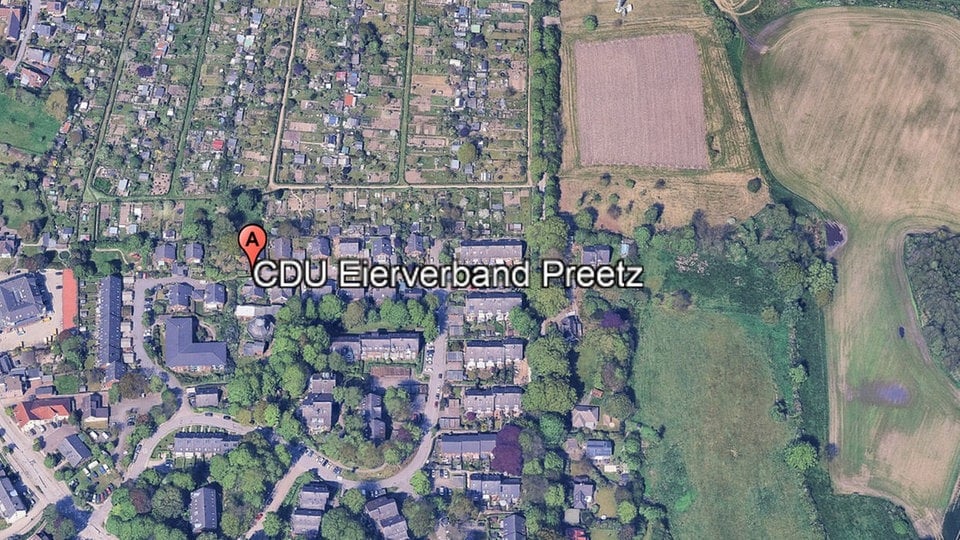
"Eierhaus" Rebellion: CDU/CSU Offices Targeted in Online Map Prank
In a bizarre and humorous turn of events that has captured national attention, numerous
CDU/CSU "Eierhaus": How Political Offices Were Renamed on Google Maps offices across Germany found themselves humorously renamed on Google Maps. What started as an isolated incident quickly escalated into a widespread digital prank, transforming official party locations into "Eierhaus" (Egg House), "Eierladen" (Egg Shop), and other whimsical variations. This unusual form of digital protest not only highlighted the vulnerabilities of online mapping platforms but also sparked a wider conversation about political expression, satire, and the power of user-generated content. The phenomenon of
Google Maps Hack: The Rise of Digital Protest via Location Edits has never been more apparent than with the recent wave of CDU/CSU *geschäftsstellen umbenannt eierhaus* incidents, turning political premises into points of digital jest.
The "Eierhaus" Phenomenon Unpacked: A Nationwide Digital Prank
The digital renaming spree targeted a significant number of CDU and CSU party offices across various German states. From the eastern regions of Saxony, Thuringia, and Saxony-Anhalt to the southern heartland of Bavaria, and even prominent cities like Düsseldorf, Hamburg, Berlin, Hannover, Mannheim, and Karlsruhe, no area seemed immune. The core of the prank involved altering the official names of these political headquarters on Google Maps to variations centered around the German word for "egg."
In many instances, offices simply became "Eierhaus" or "Eierladen." However, the creativity of the pranksters knew few bounds. In Erfurt, an office was listed as "Eierladen," while in Eisleben, it appeared as "Eierverband" (Egg Association). The Kreisverband Nordsachsen (North Saxony district association) briefly transformed into "rehbraunes Eierhaus" (fawn-brown egg house) before being reverted.
The Bavarian CSU offices saw an even more elaborate embellishment. Locations in Munich-Bogenhausen, Neuried, Vaterstetten-Parsdorf, Parsberg, and others were dubbed "CSU Eierhaus." The canteen at the CSU state headquarters in Munich received a particularly descriptive new name: "Löwe + Raute (CSU bunte Eierhaus Kantine)" (Lion + Rhombus (CSU colorful Egg House Canteen)). Some entries were even mischievously categorized as "öffentliche Toilette" (public toilet), adding another layer of satire to the already unconventional protest.
The reactions within the affected parties were predictably mixed, ranging from outright condemnation and frustration over online vandalism to more subdued and even slightly amused responses, acknowledging the prank's satirical nature. This widespread digital renaming highlighted how a seemingly innocuous online mapping feature could be co-opted for broad, impactful, and undeniably memorable social commentary. The sheer volume and geographical spread of the *geschäftsstellen umbenannt eierhaus* incidents underscore the concerted effort behind this digital rebellion.
Unmasking the Motive: From "Merz leck Eier" to Digital Rebellion
While the initial appearance of "Eierhaus" names might seem random, the motivation behind this elaborate digital prank quickly became clear. An account named "saftsackbeats" took credit for the action on the Meta platform Threads, framing it as a "demonstration" specifically aimed at Bundeskanzler Friedrich Merz of the CDU.
The roots of this digital rebellion trace back to a controversial incident reportedly in March 2026. According to dpa reports, during a student demonstration in Berlin against a new conscription proposal, an 18-year-old student held up a sign emblazoned with the provocative slogan "Merz leck Eier" (Merz lick eggs). This act led to the police confiscating the sign and initiating investigations into the student for suspected slander and defamation.
The "Eierhaus" prank, therefore, appears to be a direct satirical response to this incident and the subsequent legal actions. By renaming political offices to "Eierhaus" or "Eierladen," the pranksters were not only echoing the original slogan in a more indirect, playful manner but also protesting what they perceived as an overreach or disproportionate response to a student's expression. The playful nature of the names masks a deeper critique of political authority and the suppression of dissenting voices, especially from youth. It transforms a police incident into a widespread, humorous, and hard-to-ignore digital protest, demonstrating how online spaces can be leveraged to amplify messages that might otherwise be marginalized. The entire "geschäftsstellen umbenannt eierhaus" movement became a symbol of this underlying political commentary.
The Mechanics of Manipulation: How Google Maps Becomes a Battlefield
The widespread success of the "Eierhaus" prank naturally raises questions about the security and moderation of major online mapping services. How could so many official political locations be so easily altered? The answer lies in the fundamental architecture of platforms like Google Maps and Apple Maps, which heavily rely on user-generated content to maintain and enrich their vast databases.
Google Maps, in particular, thrives on contributions from its users. Millions of edits, new location entries, and reviews are submitted daily – Google reported receiving approximately 20 million contributions per day in 2023. This crowdsourcing model, while incredibly efficient for mapping a dynamic world, inherently creates vulnerabilities. When the volume of changes is so immense, automated systems and human moderators struggle to keep pace. Changes are often initially accepted and displayed, with comprehensive verification occurring only after the fact.
Despite robust efforts, malicious or prank-related edits can slip through. In 2024 alone, Google reported blocking or removing over 240 million policy-violating reviews and more than 70 million problematic location edits. These numbers illustrate the constant battle platforms face against misinformation and deliberate manipulation.
Apple Maps operates with similar principles, offering businesses tools like "Apple Business Connect" to manage their listings, but it too is not entirely immune to targeted interventions. The challenge for these platforms is balancing the utility of user contributions with the need for accuracy and security. Digital renaming as a form of protest isn't new; similar incidents have seen tourist destinations like the Playa de Palma on Mallorca briefly appearing with the German word "Betrunke" (Drunkards) on Apple Maps. The "geschäftsstellen umbenannt eierhaus" incident is just another prominent example of this ongoing digital cat-and-mouse game.
Implications and Insights: The Future of Digital Protest and Online Reputation Management
The "Eierhaus" rebellion is more than just a funny anecdote; it offers significant insights into the evolving landscape of digital protest, online reputation management, and the challenges faced by organizations in maintaining their digital integrity.
For Political Parties and Businesses:
*
Vigilance is Key: Organizations, especially those in the public eye, must actively monitor their online presence across all major platforms, including mapping services. Setting up alerts for changes to official business listings can provide an early warning system.
*
Utilize Official Tools: Platforms like Google My Business and Apple Business Connect are crucial. Claiming and regularly updating official listings gives organizations more control and makes it easier to report and revert unauthorized changes.
*
Rapid Response: When a prank or malicious edit occurs, a swift and coordinated response is vital. This includes reporting the issue to the platform immediately and, if necessary, issuing a statement to manage public perception.
*
Understand the "Why": While frustrating, understanding the motivation behind such actions (as in the "Merz leck Eier" context) can inform future public relations strategies and potentially de-escalate situations.
For Online Platforms and Users:
*
Enhanced Moderation: The incident underscores the ongoing need for mapping platforms to refine their moderation algorithms and human review processes to quickly identify and rectify malicious edits, especially for sensitive locations.
*
Responsible Reporting: Users also have a role to play. Reporting inaccurate or policy-violating information is essential for maintaining the integrity of these widely used services.
*
The Power of Satire: The "Eierhaus" prank demonstrates that digital spaces can be powerful arenas for satirical and symbolic protest, often circumventing traditional media channels and sparking organic public engagement. While humorous, such acts can carry serious political weight.
This incident highlights a broader trend: as our lives become increasingly digital, online spaces are transforming into new battlegrounds for social, cultural, and political expression. The ease with which collective action can manifest online, coupled with the open architecture of many platforms, creates fertile ground for creative forms of protest. The *geschäftsstellen umbenannt eierhaus* event serves as a stark reminder that online reputation management is a dynamic and continuous process, demanding constant vigilance and adaptability.
In conclusion, the "Eierhaus" rebellion against CDU/CSU offices on Google Maps was a remarkable example of digital protest blending humor with sharp political commentary. It brought to light the inherent vulnerabilities of user-generated content platforms and the ingenuity of activists in leveraging these weaknesses to spread their message. As digital spaces continue to evolve, so too will the methods of online expression and the challenges of managing public perception in an interconnected world. The story of the *geschäftsstellen umbenannt eierhaus* will undoubtedly serve as a fascinating case study in the annals of internet activism.