Google Maps Hack: The Rise of Digital Protest via Location Edits
In an increasingly digital world, the battlegrounds for public opinion and political dissent are shifting. Once confined to physical streets and traditional media, protest now finds fertile ground in unexpected corners of the internet. One such recent phenomenon that has captured attention across Germany is the systematic renaming of political party offices on Google Maps, specifically the
"Eierhaus" phenomenon targeting CDU and CSU Geschäftsstellen. This isn't just a prank; it's a potent demonstration of how everyday digital tools can be repurposed for impactful, albeit controversial, acts of digital activism.
The incident highlights a growing trend where user-generated content (UGC) platforms, designed for community contribution and information sharing, become unwitting stages for political statements. By subtly altering digital identities, activists can bypass traditional gatekeepers, generate significant media buzz, and project their message to a vast online audience, challenging both political establishments and the tech giants themselves.
The "Eierhaus" Phenomenon: A New Front in Digital Activism
The incident began to unfold when numerous offices of Germany's Christian Democratic Union (CDU) and Christian Social Union (CSU) across the nation appeared under bizarre new names on Google Maps. From Saxony, Thuringia, and Saxony-Anhalt to Bavaria, Düsseldorf, Hamburg, and Berlin, political
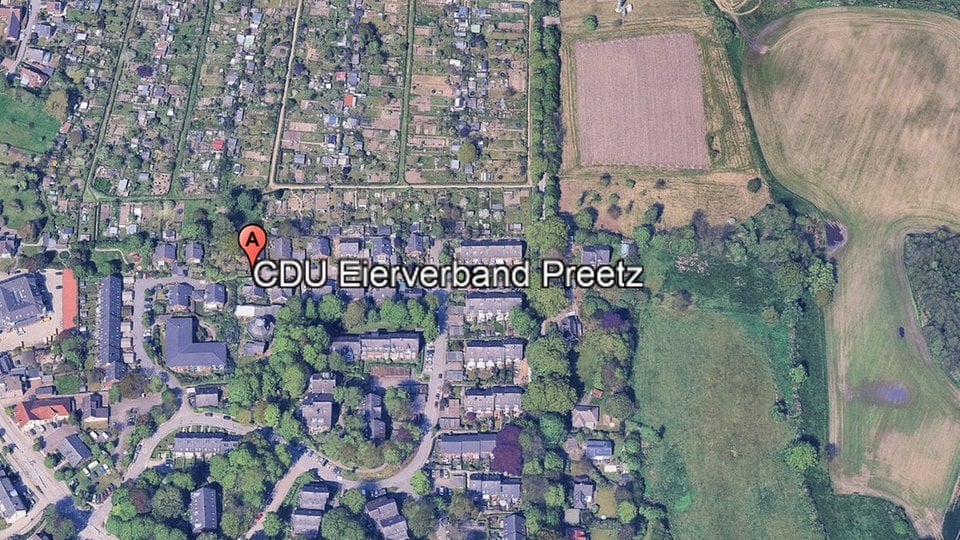
geschäftsstellen umbenannt eierhaus became a widespread and curious digital protest. The most common new designation was "Eierhaus" (Egg House), but variations quickly emerged. In Erfurt, an office became "Eierladen" (Egg Shop), while in Eisleben, it transformed into "Eierverband" (Egg Association). The CDU district office in Nordsachsen even briefly appeared as "rehbraunes Eierhaus" (deer-brown Egg House).
The creativity escalated, particularly in Bavaria, where CSU offices were not just "CSU Eierhaus" but sometimes incorporated political slogans. Entries like "CSU Söder isst Eierhaus" cleverly merged the protest with Bavarian Minister-President Markus Söder's popular social media hashtag #söderisst. Even the canteen at the CSU state headquarters in Munich was rebranded as "Löwe + Raute (CSU bunte Eierhaus Kantine)" (Lion + Rhombus (CSU colorful Egg House Canteen)), and some locations were even absurdly re-categorized as "öffentliche Toilette" (public toilet). The State Parliament in Dresden was also among the affected locations.
While the exact perpetrators remain officially unknown, an account named "saftsackbeats" on Meta's Threads platform claimed responsibility, describing the action as a "Demonstration" against CDU leader Friedrich Merz. The likely catalyst for this digital rebellion dates back to a student protest in Berlin where an 18-year-old reportedly displayed a placard with the provocative slogan "Merz leck Eier" (Merz lick eggs), leading to police confiscation and an investigation into alleged defamation. This incident seems to have ignited a creative, if unconventional, response from anonymous activists, demonstrating how a single event can inspire widespread digital action. The diverse reactions from affected parties, ranging from outright condemnation to more jocular dismissal, underscore the contentious nature of this new form of digital protest.
How Google Maps Becomes a Battlefield: The Mechanism of Manipulation
The very architecture of Google Maps, designed for collaborative information gathering, is what makes it vulnerable to such targeted digital protests. Google Maps thrives on user-generated content, with millions of contributions daily. Users can add missing places, suggest edits to existing listings, upload photos, and write reviews. This open system, while incredibly powerful for keeping maps up-to-date and comprehensive, also presents a significant challenge for moderation.
According to Google, the platform receives approximately 20 million contributions every single day. Managing this colossal volume requires a multi-layered approach involving AI, automated systems, and human reviewers. In 2024 alone, Google reported blocking or removing over 240 million policy-violating reviews and more than 70 million problematic place edits. However, due to the sheer scale, many suggested edits are initially adopted and go live before a thorough review can take place. This window of opportunity is precisely what activists exploit. They can submit a misleading edit, and for a period, potentially hours or even days, the incorrect information will be publicly displayed before Google's systems or human moderators catch it.
This isn't an issue unique to Google. Apple Maps, too, offers reporting functions and its "Apple Business Connect" platform for businesses to manage their entries. These systems, despite their robust layers of verification, remain susceptible to determined and coordinated manipulation. The incident where Apple Maps briefly showed Playa de Palma on Mallorca renamed to the German word "Betrunke" (a derogatory term related to drunkenness) illustrates the global nature of this vulnerability. The choice of Google Maps as a platform for the "Eierhaus" protest was strategic: its widespread use ensures maximum visibility, and its reliance on user input provides an accessible vector for digital disruption.
The Ethics and Impact of Location-Based Protests
The "Eierhaus" phenomenon sparks a crucial debate about the ethics and effectiveness of digital protest through location manipulation. On one hand, proponents might argue it's a non-violent, attention-grabbing form of dissent that bypasses traditional media filters. It creates public discourse, embarrasses political figures, and demonstrates a grassroots ability to disrupt official narratives. The widespread coverage generated by the incident certainly indicates its effectiveness in achieving visibility.
However, critics view such actions as digital vandalism, misinformation, or even defamation. Renaming official buildings with pejorative or nonsensical terms, or categorizing them as "public toilets," crosses a line for many. While perhaps less harmful than physical damage, it intentionally spreads false information and could constitute "üble Nachrede" (slander) or "Verleumdung" (defamation) under German law, as suggested by the police investigation into the original Merz placard. The varying reactions from politicians—some dismissing it lightly, others condemning it strongly—highlight the diverse interpretations of such actions. Is it a legitimate expression of free speech or an abuse of platform functionalities?
This form of protest aligns with concepts like "culture jamming," where activists subvert existing media and cultural forms to expose underlying issues or critique dominant power structures. In a similar vein, digitally altering the perceived identity of political offices on a global map platform is a form of media subversion. It’s a low-cost, high-impact method of protest that resonates with a digitally native generation, offering a sense of agency in a world where traditional political participation can feel disempowering. Its impact lies not just in the temporary change of a name, but in the conversation it sparks about digital integrity, freedom of expression, and the evolving nature of activism in the internet age.
Protecting Your Digital Footprint: Tips for Organizations and Users
For organizations, especially political parties or businesses with physical locations, incidents like the "Eierhaus" renaming serve as a stark reminder of the importance of actively managing their digital presence. Proactive measures are crucial to mitigate the risks of malicious edits:
* **Claim Your Google Business Profile:** This is the most critical step. By verifying ownership of your business or organization's listing, you gain direct control over the information displayed. This allows you to quickly revert incorrect edits and respond to reviews.
* **Monitor Your Listings Regularly:** Set up alerts or manually check your Google Business Profile and other map services frequently. Tools like Google Alerts can notify you if your organization's name appears in unusual contexts online.
* **Educate Staff:** Ensure that relevant team members understand how to access and manage your online listings and what steps to take if an issue arises.
* **Engage with Google Directly:** If a malicious edit goes live, use the "Report a Problem" or "Suggest an Edit" features to flag the incorrect information. For verified business owners, you have more direct channels through your Google Business Profile dashboard.
* **Build a Strong Online Reputation:** A consistent and accurate online presence, bolstered by legitimate reviews and information, can make it harder for malicious edits to gain traction or be believed by users.
For general users, the "Eierhaus" incident is also a reminder of the need for critical engagement with online information:
* **Report Inaccuracies:** If you encounter clearly false or inappropriate information on mapping services, use the platform's reporting features to flag it. This helps maintain the integrity of the data for everyone.
* **Verify Information:** Before relying solely on a single online source, especially for sensitive information, cross-reference it with official websites or trusted news sources.
* **Understand Platform Mechanics:** Be aware that user-generated content platforms are dynamic and can be manipulated. A healthy skepticism is always warranted.
Google and other mapping services are continually refining their moderation processes, employing advanced AI and expanding human review teams to combat policy violations. However, the sheer volume of content means it's an ongoing cat-and-mouse game between platform security and determined individuals or groups seeking to leverage these platforms for their own ends.
The Evolving Landscape of Digital Protest
The "Eierhaus" phenomenon is more than just a fleeting internet joke; it's a significant indicator of the evolving landscape of digital protest. It demonstrates a sophisticated understanding of how online platforms work, how to exploit their vulnerabilities, and how to harness public attention for political ends. As our lives become increasingly intertwined with digital spaces, the boundaries between the physical and virtual battlegrounds for ideas and dissent will continue to blur. Organizations and individuals alike must remain vigilant, adaptable, and critically engaged with the digital world to navigate these new forms of activism and ensure the integrity of online information. The humble map, once a static guide to the physical world, has now become a dynamic canvas for political expression, forever changing how we perceive and interact with our digital environment.